Feeling Gray

grayA couple months ago I stumbled onto a video by Teal Cubes showing his custom color scheme — blue opposite green, gray opposite white, and pink opposite yellow. The video makes a pretty compelling demonstration that there are better schemes than the 1980s Rubik’s one that most of use without much further thought. That said, I don’t really like pink stickers, and I’m not quite ready to make three color changes at once.

I was curious about the gray U face, though — and I re-stickered a black and a white cube to give it a shot.* The idea is that gray contrasts better against white than does yellow. Obviously, black would contrast even better, but it gets lost on a black cube; gray plays nicely with both black and white plastic. Here’s a video with a further explanation:
Continue reading

I Got 5 On It

Go ahead and stream the below as your read this post. It’s my strained attempt to find some topical background music consistent with the post’s forced title. Maybe it’s just the introspection of turning 36, but it’s fun to hear an updated version of a song* that we used to listen to in high school.

* Wick-It Remix of the Luniz' “I Got Five On It,” with the opening minute or so cleaved and a line muted to keep things PG-13 around these parts….

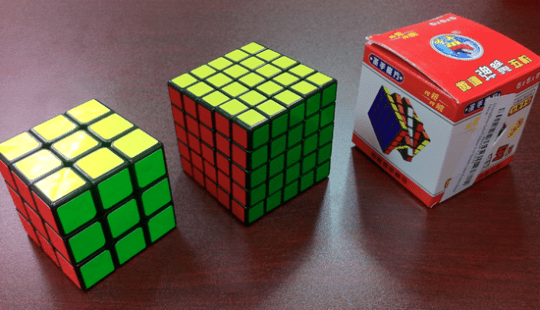
So, I received my Shengshou 5×5 yesterday from amazon. I’m not really into higher order cubes, and certainly not into speed-solving them. But I guess that curiosity got the best of me. I wanted to test my theory that a 5×5 actually would be easier than a 4×4 for want of parity issues. I *hate* 4×4 last layer parity — with its long and confusing algorithms. Two 5×5 solves in, my theory seems mostly right.

shengshou 5x5
Continue reading

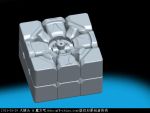
DaYan 6 (PanShi) Announced

I’m a big fan of Dayan cubes, and, for 3×3, use them exclusively. For a while, I thought the Zhanchi (Dayan 5) was the bee’s knees — in all incarnations (white, black, stickerless, 42mm, 50mm, 55mm, or 57mm). Recently, I’ve revisited my Guhong v2 — Zhanchi’s older brother, which has a somewhat blockier/thicker/clickier feeling. Cubing forums are riddled with hyperbolic, vitriolic debate on which is better. Personal preference, I’d say. Both are damn good.

There’s long been talk about a Dayan 6 model that would combine the best traits of the Guhong and Zhanchi (and even their older brothers, DaYan’s Lingyun and Lunhui). Based on this speedsolving.com thread, which gathers pics and quotes that DaYan’s designer (Daqing Bao) posted to the MF8 forum, the rumors now appear true. In fact, pre-orders are now being accepted at 51morefun.com.

Pics, Videos

Here are some pics that circulated a few days ago as part of the original threads:

And here is a video slideshow Continue reading

Review: Camcuber Zhanchi SE

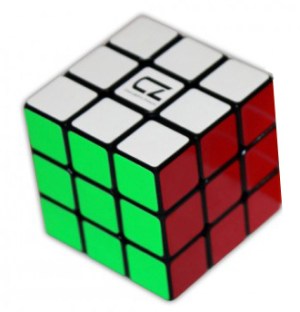
cz-blackI haven’t really posted many hardware reviews on the site, mostly because, as a mediocre solver, I’ve tended to feel like my opinion and knowledge of cubes was not very valuable. But I do think I have a discerning eye (or, as it were, touch) and that, in some ways, an average cuber’s views are more interesting (as we are still wading our way through hardware and techniques). So, sheepishly I proceed….

I’m excited to have purchased a Camcuber Zhanchi SE, which is an OEM Dayan Zhanchi that has received Cameron Brown’s custom “tune up.” Cameron sells them at his shop for $39.99 (plus $5 more for the Special Edition). When I tried to buy it a month ago, the site listed it as sold-out. I emailed to see about pre-orders, and got a near immediate response. Cameron was working on a new batch, and they’d ship soon. So, I pre-ordered, got a shipping update about three weeks later, and the cube arrived two days after that. I was surprised to find it nicely wrapped in holiday paper with a bow and candy cane and all. A really nice touch over the holidays.

Before I get into the review, here’s an excerpt from the description page: Continue reading

crystal cube hack – part 2

hacked crystal cubeI wrote last week in Part 1 of this post about hacking, so to speak, a Ghosthand Crystal Cube. As detailed in that post, I wired past the motion sensor and on-board IC that caused the irritating and impractical blinking. That forced the cube into a constant-on state once I connected two leads that I had temporarily extended through the core for testing.

As described below, I solved that problem with a switch inside the core that could be reached with a paper clip. Here is a video of the final result, showing the cube powering on/off and a sample solve in the pitch dark. It’s not a speed-cube, and it is prone to pops and lock-ups, so I solved at a casual 55-second pace.

Continue reading