
 So, at about 10 months into this thing, I feel like I’m starting to really hit a groove. My ability to learn new algorithms has accelerated dramatically, my fluidity has really increased, and my average speeds continue to fall steadily (if not quickly). At the same time, this blog is starting to gain some traction. Having done absolutely nothing to market or cultivate it — no twitter account, no facebook account, not even sharing it with many friends and family — site visits have really increased lately, my videos have gotten more views, a few folks have subscribed, and I’ve even got a dialogue going (via my youtube inbox) with a few followers.
As I wrote in my inaugural post (and then reiterated in my second and third posts), this blog was never about showing off. I was never going to be as good as the very fast cubers — for want of time, ambition, youth, and (probably) ability.  I knew that going in, and know it even more today. But I sensed early on that this would be a fun adventure. Of my many hobbies, this felt like the one most easily chronicled — the one with milestones that lent themselves to tracking, with small accomplishments susceptible of tip-giving, and with enough jargony in-crowd patois the strategic sprinkle of which would give the appearance of skill and achievement. I was correct on all fronts.
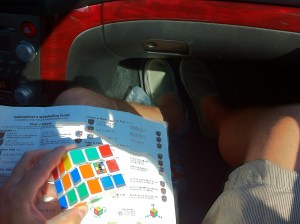 Just back from a family road trip. I found myself in the passenger seat for the first and last 8-hour legs — the car seat behind it makes the legroom too small for my wife to sit there comfortably. Boredom. Good thing I brought a cube and
  adventures in cubing