
There are limits to intuitive F2L (so-called). There, I said it. Again. Yes, the concept of pairing edges and corners in the top layer before insertion is elementary, and, in many instances, you can intuit just how to do that — splitting pairs, using empty slots, etc. But the solution to certain cases is far from intuitive. Which is to say that purely intuitive approaches might work, but inefficiently (too many moves, unnecessary cube rotations, etc.).
Cases 23 and 24 are prime examples; their cousins, 11 and 12, are close seconds. Having spent a few days on these four cases (watching videos, looking on the speedsolving wiki, etc.), I found much better solutions than my “intuitive” ones. (With the exception of #23, which I had learned from Andy Klise’s excellent F2L Cheat Sheet.)
The improved cases are demonstrated in the video below and summarized in the chart that follows it. The cube is an F2L Practice Cube, basically a Maru Cx3 with only the bottom two layers stickered. Anyone learning F2L should un-sticker the top layer of a cube to prevent distraction and increase F2L focus.
 A friend and I have a unspoken tradition of buying gag gifts for each other off our Amazon wish-lists, which amounts to us placing a bunch of random stuff on the lists to see what the other orders. Traditionally, it’s been music or movies, but we’ve definitely had some weird things come up — digital home thermostats, drill bits, and the like. Long ago, I placed a stickerless Dayan Megaminx (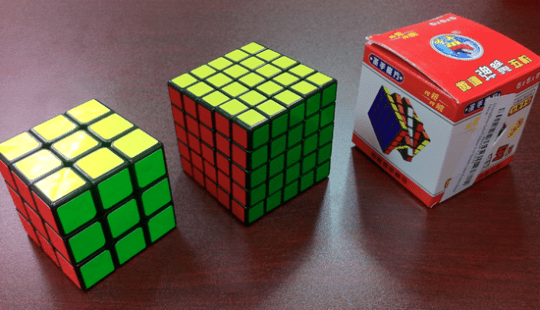
 Excepting a one-week detour to
  adventures in cubing